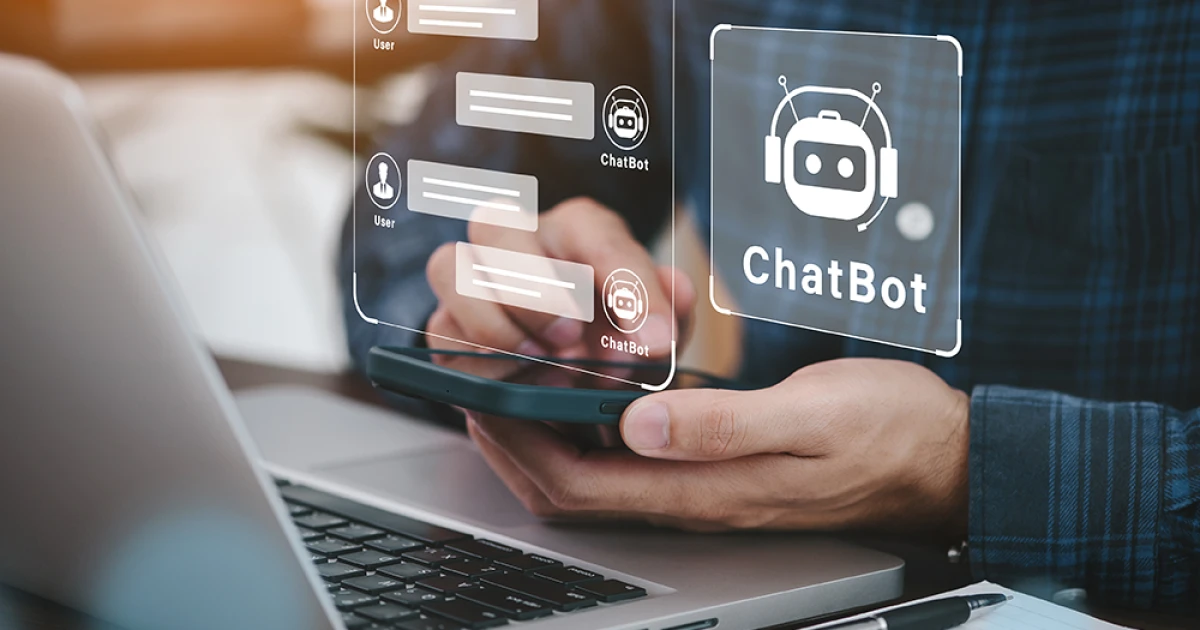
The rise of AI chatbots has been one of the defining technology stories of recent years. Gartner predicts that by 2027, chatbots will become the primary customer service channel for roughly a quarter of organisations. But amid the excitement about conversational AI, a critical distinction is being overlooked: chatbots are excellent at handling inbound queries, but they cannot replace SMS for outbound communication.
The fundamental difference
AI chatbots sit inside apps, websites, and messaging platforms. They wait for a customer to initiate a conversation. This makes them powerful tools for customer support, product recommendations, and guided transactions. But they have a fundamental limitation: they cannot proactively reach out to someone who is not already engaged with the platform.
SMS, by contrast, is an outbound channel. It can reach anyone with a mobile phone, at any time, without requiring the recipient to have an app open or be connected to the internet. This makes it irreplaceable for:
- Two-factor authentication — security codes that need to arrive within seconds
- Appointment reminders — proactive notifications that reduce no-shows
- Emergency alerts — time-critical messages where delivery cannot be left to chance
- Delivery updates — real-time notifications about order status
- Payment reminders — prompts that drive action before deadlines
The engagement gap
SMS has a 98% open rate, with most messages read within 90 seconds. Chatbot engagement rates, by comparison, vary enormously depending on the platform and implementation. McKinsey's research on digital customer engagement found that while AI can significantly improve customer satisfaction when deployed well, the engagement relies entirely on the customer choosing to interact with the bot.
You cannot send an appointment reminder through a chatbot if the patient is not currently on your website. You cannot deliver a one-time password through a chatbot if the user does not have your app open. SMS bridges that gap.
How AI enhances SMS
The real opportunity lies in using AI to make SMS smarter, not in replacing SMS with chatbots. AI can enhance business messaging in several ways:
- Smart send-time optimisation — AI analyses engagement patterns to determine the optimal time to send each message
- Personalisation at scale — machine learning models can tailor message content based on individual customer behaviour and preferences
- Intelligent routing — AI decides whether a customer interaction should be handled by SMS, email, WhatsApp, or a chatbot based on the context and urgency
- Natural language understanding — AI-powered analysis of inbound SMS replies to automatically categorise, prioritise, and route responses
SMS as the bridge between AI and customers
Consider a practical example: a healthcare provider uses an AI chatbot on their website for patient queries and appointment booking. The chatbot is excellent during office hours when patients are browsing the website. But who sends the appointment reminder the day before? Who delivers the prescription notification? Who sends the follow-up satisfaction survey?
The answer is SMS — via a reliable messaging API that integrates with the chatbot's backend systems. The AI handles the intelligent decision-making (when to send, what to say, which patients to follow up with), while SMS handles the delivery to any mobile phone, anywhere, with 98% certainty it will be read.
The practical takeaway
Businesses should not think of AI chatbots and SMS as competing channels. They serve different purposes. Chatbots handle inbound conversations. SMS handles outbound reach. The most effective customer communication strategies use both: AI for interactive engagement, SMS for guaranteed delivery of critical messages to any mobile phone, anywhere.
At Faretext, our SMS API is designed to integrate seamlessly with AI platforms, CRM systems, and chatbot frameworks — so you can build intelligent, automated communication workflows that combine the best of both worlds. Get started with 25 free credits.
Frequently asked questions
Can I integrate SMS with my existing chatbot?
Yes. Our REST API can be called from any chatbot platform, allowing your AI to trigger SMS messages for appointment reminders, verification codes, and follow-up notifications based on chatbot interactions.
Will AI replace SMS in the future?
Unlikely. AI enhances how businesses decide what to send and when, but SMS remains the delivery mechanism with the broadest reach and highest open rates. The two technologies are complementary, not competitive.
What is the best way to combine AI and SMS?
Use AI for decision-making (segmentation, personalisation, timing) and SMS for delivery. Common patterns include AI-triggered marketing campaigns, automated follow-ups based on customer behaviour, and intelligent routing between channels.
Sources: Gartner — Chatbots as Primary Customer Service Channel, McKinsey — AI-Enabled Customer Service